

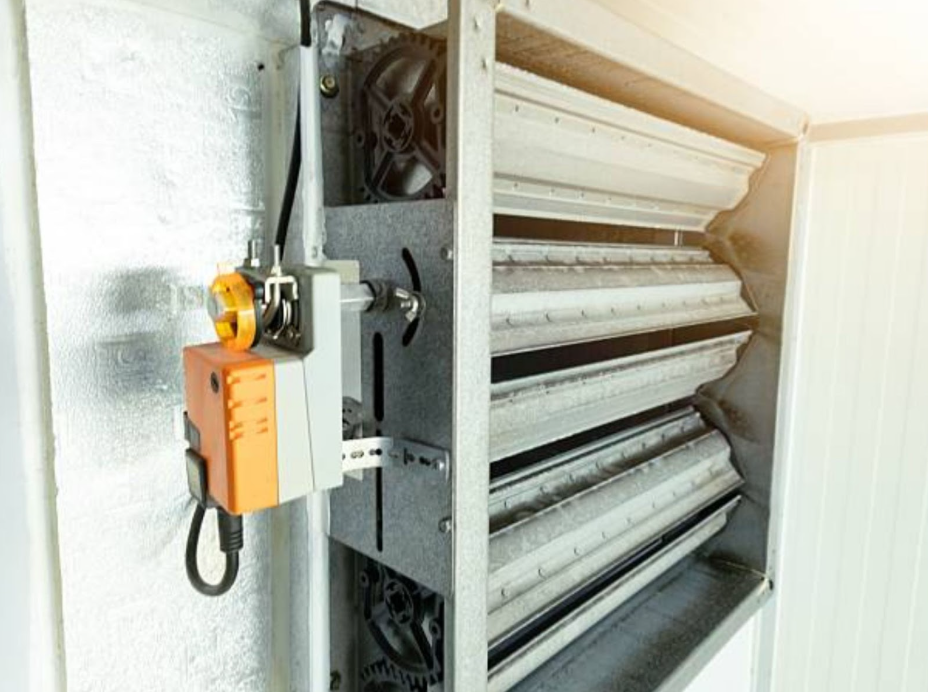
Heating and cooling equipment may produce enough conditioned air while still leaving certain rooms uncomfortable. The issue often lies in how that air is distributed through the ductwork. When evaluating dampers HVAC contractors can use motorized models to control airflow through selected duct branches. This approach can direct conditioned air toward occupied areas while reducing unnecessary airflow to other parts of a building.
What Does an HVAC Damper Do?
An HVAC damper is a movable plate installed inside a duct. It opens, closes, or moves to an intermediate position to regulate how much air passes through that section of the system.
Manual dampers are adjusted by hand and generally remain in the selected position until someone changes them. Motorized dampers use an actuator to change position in response to a thermostat, zone controller, switch, or another compatible control.
These components do not create heated or cooled air. Instead, they manage the path that conditioned air follows after it leaves the furnace or air handler.
Where Are Motorized Dampers Commonly Used?
Motorized dampers are frequently installed as part of a zoning system. A zoned system divides a home or building into separate areas, each with its own temperature control. When one zone calls for heating or cooling, the associated damper opens. Dampers serving zones that do not need conditioned air may close or partially close.
Potential applications include:
- Two-story homes with different temperatures on each floor
- Homes with finished basements or converted attics
- Additions connected to existing ductwork
- Guest rooms that are used only occasionally
- Home offices with changing occupancy
- Light commercial spaces with separate work areas
- Rooms affected by strong afternoon sunlight
Zoning can provide more precise control, but it must be designed around the capacity and airflow needs of the HVAC equipment.
How Do Manual and Motorized Dampers Differ?
Manual dampers are useful for basic air balancing. An installer can adjust them during commissioning to reduce airflow in one branch and allow more air to reach another. They are relatively simple, but they cannot respond automatically when room conditions change.
Motorized dampers can open and close as the system operates. This makes them suitable for applications requiring changing airflow patterns throughout the day.
The choice depends on the project. A home with a minor, consistent airflow imbalance may need only manual balancing. A property requiring separate temperature zones may benefit from motorized control.
What Should Contractors Check Before Installation?
Correct sizing is essential. The damper must match the duct’s shape and dimensions while allowing suitable airflow when open. Contractors should measure the duct itself rather than relying on the dimensions of a nearby register or grille.
The installation location must provide enough room for the actuator and future service access. Wiring should follow the damper manufacturer’s directions and applicable electrical requirements. Installers should also confirm compatibility among the damper, thermostat, transformer, zone panel, and HVAC equipment.
Before adding zoning controls, evaluate:
- Available static pressure
- Blower performance
- Minimum airflow requirements
- Supply and return duct capacity
- Number and size of proposed zones
- Equipment staging or variable-speed capability
- Manufacturer requirements for the HVAC unit
Closing several duct branches can increase static pressure. If the system is not designed for that condition, airflow may become noisy or place added strain on system components.
What Installation Mistakes Should Be Avoided?
One common mistake is treating a damper as a cure for every temperature complaint. Poor insulation, air leakage, undersized equipment, restricted returns, damaged ducts, and excessive solar heat gain may produce similar symptoms.
Other mistakes include:
- Selecting the wrong damper size
- Installing the actuator where it cannot be serviced
- Using incompatible controls
- Ignoring airflow requirements when several zones close
- Failing to label the zone served by each damper
- Placing the damper where duct fittings interfere with movement
- Skipping system testing after installation
Each damper should move freely through its intended range. After installation, the contractor should test every zone and confirm that the HVAC equipment responds correctly to individual thermostat calls.
How Should Dampers Be Inspected?
Home inspectors, energy auditors, and service technicians should look for loose wiring, damaged actuators, unusual duct noise, and dampers that fail to open or close. A room receiving little air may have a control fault rather than a duct-sizing problem.
During service, technicians can verify the commanded position of each damper and compare it with actual airflow. They should also check filters, coils, registers, and return-air pathways before attributing low airflow to one component.
Homeowners should avoid changing damper positions or control wiring without understanding the zoning design. An adjustment that improves one room could reduce airflow somewhere else or affect system pressure.
Choosing the Right Airflow Control Component
Motorized dampers can support balanced comfort when they are correctly selected, installed, and matched with suitable controls. Contractors should begin with a full airflow assessment, confirm equipment requirements, and explain what the proposed damper system can and cannot correct.
HVAC professionals, builders, inspectors, and homeowners can visit Suncourts to review motorized damper options and choose components suited to their duct dimensions, control setup, and airflow goals.
