

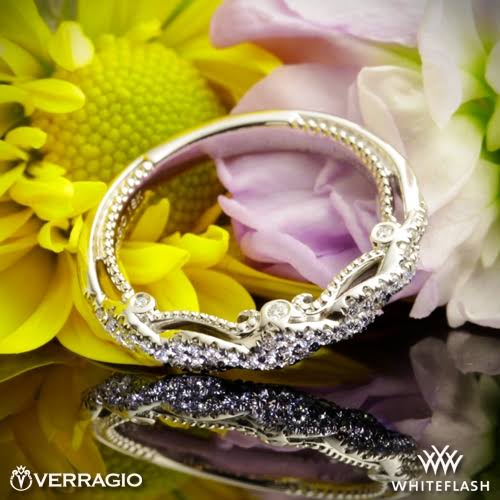
Choosing an Estate Wedding Band You Will Still Want to Wear in Fifty Years
The engagement ring gets months of deliberation. The band, which is the piece most people actually wear every single day for the rest of their lives, often gets a fortnight. That imbalance is worth correcting, particularly if you are drawn to older pieces, because estate wedding bands come with a set of practical considerations that new manufacturing simply does not have. Each one has an existing size, an established profile, a finished pattern, and a history of wear, and all four affect whether it will suit you for the next five decades.
What “estate” actually means
The three terms shoppers encounter are not synonyms, and knowing the difference will save you money and confusion.
Estate means previously owned. That is the whole definition. An estate band may be a hundred years old or three years old. The word describes ownership history, not age.
Vintage conventionally describes pieces roughly twenty to one hundred years old.
Antique is generally reserved for pieces over a century old.
A late-model designer band sold as estate jewelry can be an excellent buy, often at a substantial discount to retail, without carrying any of the fragility of a genuinely antique piece. Ask a seller which category a band falls into and roughly what decade it dates from. A specialist will answer without hesitation.
The fit problem nobody warns you about
This is where most people are caught out. A wedding band has to sit against an engagement ring, and if the engagement ring has a low gallery, a wide basket, or a raised center stone, a straight band will not lie flush. You end up with a visible gap, or worse, a band that rocks and grinds against the ring’s setting every time you close your hand. Over years, that contact wears metal from both pieces.
There are three usual solutions. A contoured or notched band curves to follow the engagement ring’s outline. A slightly narrower profile can slip closer than a wide flat one. Or the two rings can be soldered together, which eliminates the problem entirely but permanently commits you to the pairing and makes future sizing more complex.
Whichever route you take, try the band against your actual engagement ring before committing. Photographs will not tell you whether a fit is clean. If you are buying at a distance, ask the seller for the band’s exact width and profile measurements and compare them against your ring.
Profile and metal decide how it ages
Width and profile are comfort decisions more than aesthetic ones. Comfort fit bands have a domed interior that clears the knuckle more easily and suits wider designs. Flat interiors sit closer to the finger and can feel more secure but less forgiving in hot weather.
Metal determines how the band looks after decades. Platinum does not really wear away; it displaces, which is why old platinum develops that soft grey patina and a slightly rippled surface rather than becoming visibly thin. Gold abrades, so a gold band worn continuously for fifty years will genuinely lose material at the base of the shank. Neither is a defect. But if you are looking at an older gold band, check the thickness at the bottom of the shank, because a heavily thinned shank will eventually need rebuilding.
The sizing constraint
Not every band can be resized. Full eternity bands set all the way around cannot be sized conventionally at all. Bands with engraving or a repeating pattern across the whole shank can sometimes be sized only within a very narrow range before the pattern breaks. Channel-set stones limit the work a jeweler can safely do.
Establish this before you fall for a piece. Ask directly whether the band can be sized, by how much, and whether the seller will handle it.
What to ask a seller
Four questions cover most of it: what era the band is from, what the metal and marks are, what restoration has already been done, and whether it can be sized to you. Anyone who deals in period jewelry seriously will have those answers ready and will volunteer the repairs rather than wait to be asked.
To see how estate pieces look when they have been properly examined and honestly described, browse the current selection at Gesner Estate Jewelry, where every band is hand selected and evaluated before it is offered. The right band is one you stop noticing, in the best possible way, about a week after the wedding.
