

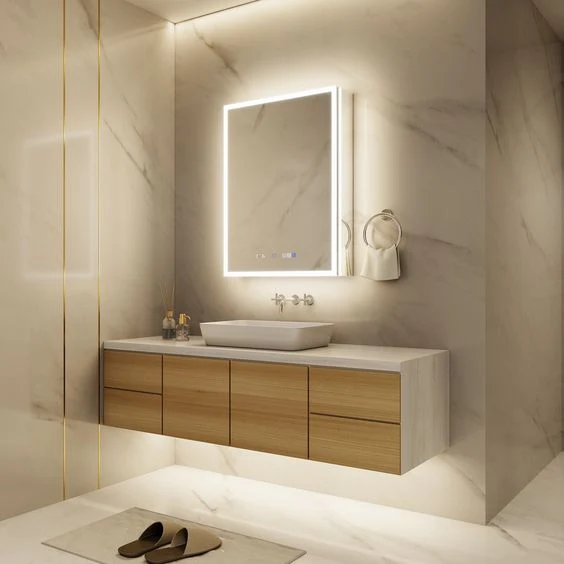
Most bathroom mirrors are lit by whatever fixture happens to be on the ceiling, which is rarely aimed at the one spot that actually needs it, a face standing at the sink. A medicine cabinet with lights solves that mismatch by moving the light source to eye level and building storage into the same unit, so the fixture above the vanity finally does two jobs instead of one. For anyone renovating on a budget, that combination is worth understanding before defaulting to a plain mirror and a ceiling can light, especially in a smaller bathroom where there is no spare wall for a second fixture.
Why This Matters
A ceiling-mounted downlight casts shadows exactly where precision matters, under the chin, along the jaw, around the eyes. That single design flaw shows up in a few familiar ways:
Common complaints with ceiling-only lighting
- Shaving nicks or missed patches from light that never reaches the lower face
- A skincare or makeup routine that looks different the moment you step into daylight
- No real place to keep daily toiletries, so the counter fills up instead
- A mirror that fogs over after every shower, adding a few extra minutes to getting ready
None of these are cosmetic complaints. They are lighting and layout problems that a plain mirror was never built to solve, no matter how good the frame looks, and they tend to get more noticeable in bathrooms shared by more than one person.
The Lighting Difference
Moving the bulbs from the ceiling to the mirror’s edge changes more than convenience. It changes how accurately you can see yourself in the first place.
What changes with integrated lighting
- LED strips rated CRI 90+, so skin tone and color read the same indoors as they will outside
- Adjustable color temperature, typically 3000K to 6000K, for a warmer evening routine or a crisper daytime one
- Dimmable settings on most models, useful for a middle-of-the-night visit that does not need full brightness
- Touch-sensor controls in place of a mechanical switch, which matters with wet hands
Anti-fog backing on the glass is standard on most current units too, which means fewer minutes spent wiping condensation before getting started, and it tends to hold up better over time than a spray-on treatment applied after the fact.
More Than Just a Light
The cabinet behind the mirror does its own share of the work, and it is often the part buyers weigh the least before purchase.
Built-in extras on modern models
- An integrated outlet rated up to 1800W, enough to run a hair dryer or flat iron without an extension cord
- USB-A and USB-C ports for charging an electric toothbrush or razor overnight
- Soft-close hinges and magnetic door catches, so the door seats flush without a mechanical latch
- ETL or UL certification confirming the electrical components are rated for a damp, outlet-adjacent wall
That last point is easy to overlook but worth checking, since not every lighted mirror on the market carries it, and the ones that skip it are usually the ones that fail first.
Installation Notes
Sizing trips up more buyers than any other decision in this category, more than the finish or the shelf configuration inside.
Confirm before you buy
- The rough-in width against the vanity’s centerline rather than the wall’s full width
- Whether the unit needs a recessed cut into the wall, which means checking for studs or plumbing first, or mounts on the surface instead
- Where the electrical connection needs to land, since a recessed unit may require a nearby junction box rather than running off the cabinet’s own internal wiring
Several manufacturers now offer no-drill, surface-mounted options specifically for renters or anyone who would rather not open a wall, which makes the swap possible in an afternoon rather than a weekend.
A medicine cabinet with lights is one of the few bathroom fixtures that earns its cost twice over, once in daily lighting and again in the storage it frees up on the counter. The lighting fixes a problem most people never think to name, the storage clears the clutter that built up around the old mirror, and the electrical layer covers the small appliances a bathroom always seems to collect. Retailers such as Allsumhome publish sizing charts and installation guides for exactly this kind of swap, which makes the decision easier for anyone tackling it without a contractor.
