

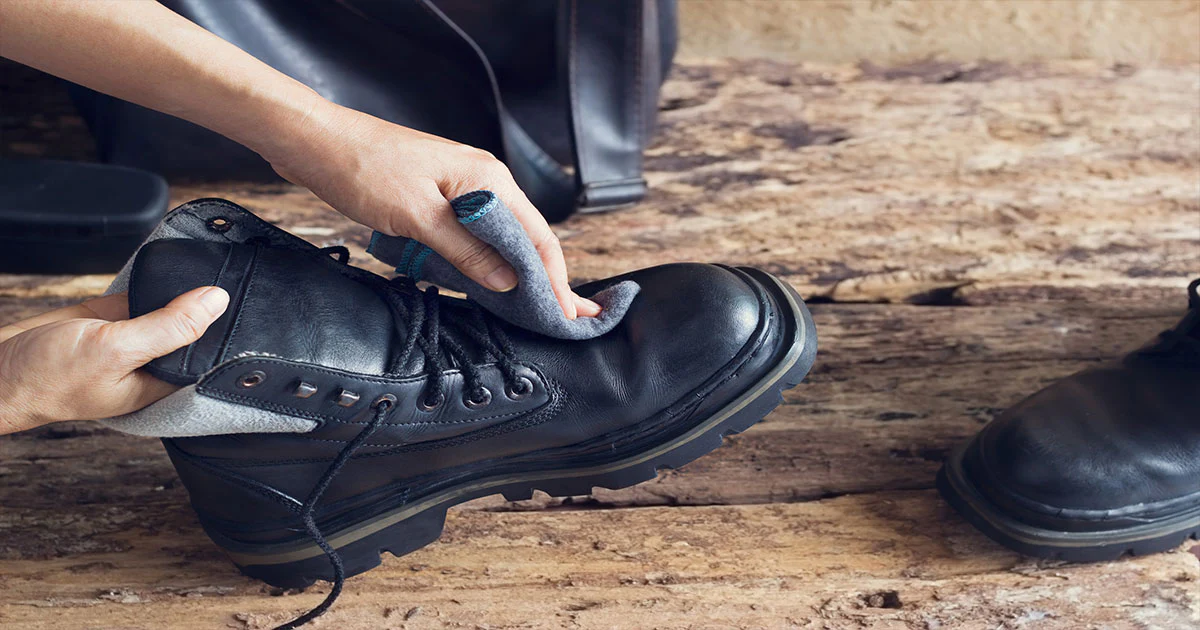
The most common reason men and women find themselves researching how to stretch leather boots is a purchasing decision that could have gone differently. A boot that fits correctly from the outset — accounting for the specific variables that leather boot fit involves — rarely requires stretching beyond the natural break-in conformity that quality leather produces with regular wear. Understanding how to stretch leather boots is genuinely useful knowledge, but understanding how to stretch leather boots becomes less necessary when the purchasing decision accounts for the fit variables that send most buyers in search of stretching solutions in the first place. This guide covers those variables — the fit evaluation mistakes that create leather boot fit problems, the sizing considerations specific to leather construction, and the break-in expectations that prevent premature stretching interventions that would not have been needed with a few more weeks of patient wear.
Prevention is a more effective strategy than correction — and in leather boot fit, it is consistently available to buyers who know what to look for before purchasing.
Why Leather Boot Fit Is Different From Athletic Shoe Fit
The fit evaluation instincts that most men and women develop through years of athletic shoe purchasing transfer poorly to leather boot fit — and this transfer is the source of most leather boot fit problems that stretching is subsequently sought to resolve.
Athletic shoes are designed to fit closely from the first wearing — their synthetic uppers and foam constructions do not change shape meaningfully with use, so the fit at purchase is the fit the wearer will have throughout the shoe’s life. Sizing for immediate comfort in athletic footwear is correct because no meaningful fit evolution will occur after purchase.
Leather boots are fundamentally different. Full-grain leather uppers — the construction standard in quality work, tactical, and outdoor boots — conform progressively to the wearer’s foot shape across the break-in period, producing a custom fit that the boot does not have at purchase and that no other material replicates. A leather boot sized for immediate athletic-shoe comfort is almost always sized too large — it will feel comfortable on day one and sloppy by week four, as the leather conforms to a foot shape smaller than the space it has been given.
The correct sizing approach for leather boots accounts for this evolution — accepting a degree of initial snugness at specific points that break-in will resolve, rather than selecting size based on the immediate comfort standard appropriate for non-conforming materials.
The Fit Variables That Matter at Purchase
Length fit — the baseline measurement. Length fit in leather boots follows a similar logic to athletic footwear — approximately a thumb’s width of space between the longest toe and the boot’s toe box is the standard target. Where leather boot length fit diverges from athletic shoe fit is in the tolerance for initial snugness: a leather toe box that compresses the toes lightly at purchase will typically expand with break-in to provide comfortable clearance; a toe box with generous space at purchase will remain generous — or become more so as the leather conforms and the insole compresses.
Volume fit — the variable most buyers underestimate. Foot volume — the three-dimensional space that the foot occupies, accounting for arch height, forefoot width, and overall foot depth — varies significantly between individuals with identical length measurements and is poorly accounted for by length-based sizing alone. A boot in the correct length that feels tight across the forefoot or compresses the arch is a volume mismatch — one that stretching can partially address but that correct initial sizing would have prevented entirely.
Buyers with high-volume feet — high arches, wide forefeet, or significant instep height — should specifically seek out boots available in wide width options or with volume-accommodating lasts rather than attempting to resolve volume mismatch through stretching after purchase. Stretching addresses width pressure effectively but cannot add meaningful volume to a boot whose last shape is fundamentally incompatible with the wearer’s foot geometry.
Heel fit — the most misread signal. Heel slip in a new leather boot is the fit signal most frequently misread as a sizing problem requiring correction. A correctly fitted leather boot will exhibit noticeable heel slip when new — the heel must clear the boot’s counter during each step until the insole has compressed and the upper leather has stiffened and conformed to the foot’s heel shape. This process typically takes two to four weeks of regular wear.
Buyers who interpret initial heel slip as evidence that the boot is too large and size down accordingly end up in a boot that is too small across the forefoot and toe box — creating the width pressure and toe compression that stretching is then sought to resolve. Accepting initial heel slip in correctly sized leather boots and allowing break-in to address it is consistently the better approach than sizing down to eliminate it immediately.
Shaft fit for tall boots. Pull on and tall leather boots add a shaft fit dimension that low-cut footwear does not present — the shaft must be wide enough to accommodate the calf during donning while fitting snugly enough during wear to provide ankle support without flopping. Buyers with larger calves should specifically confirm shaft circumference measurements against their own calf dimensions before purchasing tall leather boots — a shaft that cannot be pulled on at all, or that sits so loosely that it provides no lateral support during wear, represents a fit failure that stretching cannot address.
Timing: When to Evaluate Fit and When Not To
Evaluate fit at the end of the day. Feet swell measurably across a day of activity — by as much as half a size in volume between morning and evening in active individuals. A leather boot evaluated for fit first thing in the morning will feel noticeably tighter by afternoon — and a boot sized to morning foot dimensions will be uncomfortably tight during the afternoon hours when professional and outdoor use most demands comfort. Evaluating leather boot fit after several hours of activity — when foot volume is at or near its daily maximum — produces sizing decisions that remain comfortable across the full use day rather than only during its early hours.
Evaluate fit with the socks you intend to wear. Sock thickness affects leather boot fit significantly — a boot sized for thin dress socks will be genuinely too tight with the thick cushioned or wool socks appropriate for cold weather, extended outdoor use, or professional environments where cushioning matters. Bringing the specific socks intended for primary use to any in-person fitting evaluation, or accounting for sock thickness when using online sizing guidance, prevents the fit mismatch that sock thickness differences create.
Do not evaluate fit immediately after trying boots on cold. Feet that have been inactive — particularly in cold conditions — are at their minimum volume and provide an unrepresentative fit baseline. Walking in the boots for ten to fifteen minutes before making a fit assessment allows the foot to reach its active volume and provides a more accurate representation of how the fit will perform during actual use.
The Break-In Period: What Is Normal and What Requires Intervention
Understanding what normal leather boot break-in feels and looks like prevents premature stretching interventions that disturb a conformity process that would have resolved naturally with continued wear — and helps identify the fit problems that break-in will not resolve and that require either stretching or sizing reconsideration.
Normal break-in characteristics:
Heel slip that decreases progressively across the first two to four weeks of regular wear — resolving to a secure heel fit as the insole compresses and the upper leather stiffens at the heel counter. Slight forefoot pressure that reduces as the leather upper softens and begins conforming to the foot’s width profile. General stiffness and reduced flexibility at the ankle and vamp that decreases as the leather flexes repeatedly and the fiber matrix relaxes into the foot’s movement pattern. Minor hotspots at high-contact points — the ankle bone, the outer fifth metatarsal, the toe tips — that typically resolve within the first week as the leather at these points begins conforming.
These are not problems. They are the expected characteristics of quality leather boots in their initial break-in phase — and intervening with stretching before this phase has completed often produces unnecessary changes to a boot that would have fit correctly with continued wear.
Break-in characteristics that indicate a genuine fit problem:
Pain rather than pressure at the toe box — indicating length that is too short rather than width that will conform with break-in. Heel slip that does not decrease after four weeks of regular wear — indicating a last shape incompatible with the wearer’s heel geometry rather than normal break-in looseness. Forefoot pressure that does not reduce after two weeks of regular wear — indicating a volume mismatch that the leather’s conformity range cannot address without mechanical stretching assistance. Numbness or circulation restriction at any point — indicating a fit problem that requires immediate attention rather than continued break-in.
When Stretching Is and Is Not the Right Answer
Armed with accurate fit evaluation and realistic break-in expectations, the decision of whether stretching is the appropriate intervention for a specific fit problem becomes significantly clearer:
Stretching is appropriate for: Minor to moderate width pressure at the forefoot that has not resolved after two weeks of regular wear. Slight toe box compression in boots that are otherwise correctly fitted. Localized pressure at specific anatomical points — bunions, hammer toes, or prominent ankle bones — that create hotspots in an otherwise well-fitting boot.
Stretching is not appropriate for: Boots that are too short — length cannot be meaningfully added through stretching without structural damage. Fundamental volume mismatches between the boot’s last shape and the wearer’s foot geometry — stretching can add width but cannot change last shape. Fit problems that have not been given adequate break-in time — intervening with mechanical stretching before break-in is complete often changes boots that would have fitted correctly with patience.
Exchange or resizing is appropriate for: Any fit problem in the length dimension. Heel slip that persists beyond four weeks of regular wear. Fit problems that cause pain or circulation restriction rather than manageable pressure. Volume mismatches that stretching cannot address within its realistic range of effect.
The Right Fit From the Start
The knowledge of how to stretch leather boots is worth having — but the more valuable knowledge is how to avoid needing it. Correct fit evaluation at purchase, realistic break-in expectations, and the patience to allow quality leather to conform naturally produce the outcome that stretching attempts to recover — a boot that fits as though it was made for the specific foot wearing it, without the intervention that a better initial decision would have made unnecessary.
BootsPlusMore carries a curated range of leather boots across work, tactical, hiking, and everyday constructions — with the fit knowledge and selection depth to help every buyer find the right boot from the first wearing. Explore the full collection and start with the fit that makes stretching a last resort rather than a routine requirement.
