

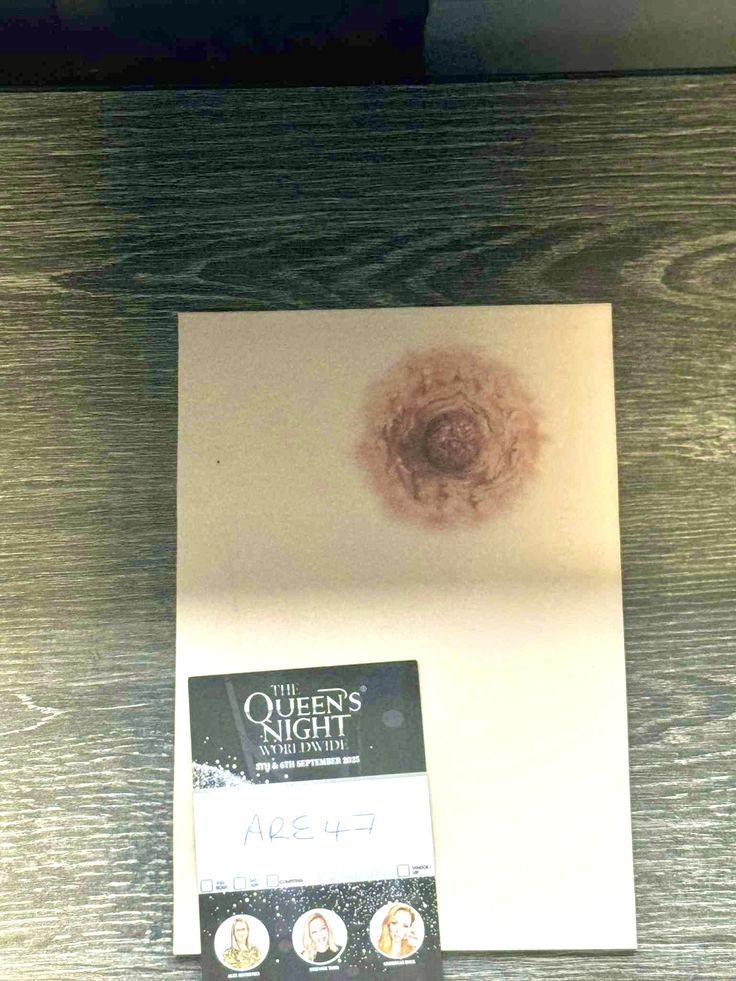
Three-dimensional tattooing operates as an exercise in applied perceptual psychology, transforming a living, curved surface into a convincing visual illusion. Rather than relying on the bold black outlines and flat color fills of traditional tattooing, 3d areola tattoo tempe eliminates hard borders in favor of continuous tonal gradients, calculated light physics, and anatomical geometry. When executed properly, the human visual cortex—which instinctively decodes shading, scale, and occlusion to navigate the physical world—interprets flat pigment deposited in the dermis as recessed cavities, tactile textures, or objects hovering above the skin.
1. Tonal Values, Chiaroscuro, and Light Physics
Because tattoo ink resides beneath the epidermis on a single plane, depth cannot exist physically; it must be engineered through optical contrast. The human eye naturally perceives bright, sharp, high-contrast elements as advancing toward the viewer, while darker, muted, low-contrast areas appear to recede.
-
The Five-Zone Value Scale: Master 3D tattoo artists break down every form into five distinct lighting zones: the highlight (where light hits directly), the mid-tone (the true local color or base tone of the object), the core shadow (the darkest band on the object where light can no longer wrap around), reflected light (a subtle glow along the shadowed edge caused by light bouncing off nearby surfaces), and the cast shadow (the shadow the object throws onto the skin). Omitting reflected light makes an object look flat and pasted-on; including it makes the form round naturally in space.
-
Chiaroscuro and Black Anchoring: Borrowed from Renaissance painting, chiaroscuro—the dramatic interplay between extreme light and deep dark—provides the structural foundation of 3D work. Artists pack pure, undiluted black pigment into the deepest recesses of a design to push those zones visually backward. Without an anchor of true black, mid-tones look muddy and white highlights lose their luminosity.
-
Greywash Gradients and Whip Shading: Real-world surfaces rarely shift abruptly from light to dark unless severed by a razor-sharp edge. To replicate how light diffuses across curved forms like spheres, muscles, or metallic cylinders, artists use calibrated dilutions of black ink (greywash) applied via tight circular layering or whip shading. Smooth tonal transitions trick the eye into reading gradual surface curvature.
-
Strategic Negative Space (Skin Breaks): Leaving patches of un-tattooed skin exposed is critical for realism. Natural skin tone serves as a warm, organic mid-tone that prevents heavy ink saturation, while simultaneously anchoring the artwork to the wearer’s body. When the viewer sees actual skin pores inside the highlights of a tattoo, the brain seamlessly blends the illusion with reality.
2. Shadow Architecture: Elevation vs. Recession
Shadow placement is the primary mechanism that tells the viewer’s brain where an object sits relative to the surface of the body. A slight error in shadow angle, edge hardness, or opacity immediately shatters the illusion.
-
Strict Single-Source Lighting: Before starting, the artist locks in one imaginary light source—most commonly angled from above and slightly to the side, mimicking natural overhead sunlight or indoor lighting. Every component in the tattoo must obey this exact light vector. If a mechanical gear casts a shadow to the lower right while a nearby water droplet casts its shadow to the upper left, the brain detects the contradiction and rejects the 3D effect.
-
Detached Drop Shadows (The Floating Effect): To make an insect, geometric shape, or stitched ribbon appear suspended in mid-air above the skin, artists use a detached drop shadow. By placing a soft-edged, translucent greywash shadow slightly offset from the subject, the artist creates the visual impression of empty space between the object and the epidermis. The distance and softness of the shadow control the perceived height: a tight, darker shadow makes the object hover a millimeter above the skin, whereas a wider, softer, lighter shadow makes it float higher.
-
Tight Inner Shadows (The Carved or Recessed Effect): Creating the illusion of a hole, torn flesh, or a hollowed-out biomechanical chamber requires inverting the shadow logic. When overhead light strikes an opening in the skin, the edge closest to the light source blocks the rays and casts a dense, sharp-edged shadow directly onto the interior wall of the cavity. Meanwhile, the opposite lip of the opening catches a bright rim highlight. This high-contrast edge signals to the brain that the surface drops inward beneath the dermis.
-
Specular Highlights and Micro-Texture: At the final stage of the tattoo, artists apply tiny, opaque dots or hairline strokes of pure white ink—known as specular highlights—to simulate wet surfaces, glass, polished chrome, or sharp edges. Combined with micro-textures such as skin pores, fabric weaves, rust, or cracked stone, these highlights provide tactile cues that convince the viewer they could physically feel the texture if they touched the skin.
3. Linear Perspective, Foreshortening, and Anatomy
Even flawless shading collapses if the underlying geometry ignores perspective or fights against the natural contours of the human body. Unlike paper or canvas, skin stretches, twists, and wraps around moving joints and muscle bellies.
-
Foreshortening and Vanishing Points: Artists apply architectural perspective rules—converging parallel lines toward one or more vanishing points—to create depth in geometric optical illusions, such as impossible staircases, sunken grids, or portals. For organic subjects like a reaching hand or an emerging creature, artists use foreshortening: exaggerating the scale of elements closest to the viewer while compressing the proportions of elements receding into the background, mimicking the depth of field of a wide-angle camera lens.
-
Anatomical Contour Mapping: A flat stencil placed over a curved forearm, calf, or shoulder will distort once wrapped around the limb. Experienced 3D artists custom-design stencils directly on the body using freehand markers, aligning the perspective lines of the tattoo with the natural topography of the muscles. Placing a spherical illusion over the rounded cap of a deltoid, or positioning a biomechanical joint directly over the flexion crease of an elbow, allows the wearer’s physical anatomy to amplify the visual depth.
-
Viewing Angle Calibration: Because skin wraps in three dimensions, most 3D tattoos are engineered for a primary viewing angle—usually straight-on when the limb is in a relaxed, natural posture. Artists check the stencil from multiple distances and angles before tattooing to ensure the perspective does not warp awkwardly when the person stands naturally.
4. Sub-Styles of 3D Tattooing
-
Biomechanical and Cybernetic: Designs that appear to peel, tear, or slice open the skin to expose intricate machinery, hydraulic pistons, wiring, or alien musculature nested beneath the surface.
-
Trompe-l’œil (Optical Illusions): Derived from the French term meaning “deceive the eye,” this style uses warped grids, sunken geometric tunnels, and impossible architecture to make limbs appear hollowed out, twisted, or transparent.
-
Hyper-Realistic Objects and Nature: Lifelike depictions of insects, water droplets, jewelry, stitches, or carved reliefs rendered with crisp cast shadows so they appear physically resting on or embedded in the skin.
5. Aging, Healing, and Technical Longevity
Tattooing is a biological process: macrophages in the dermis encapsulate ink particles, and over years of natural cell turnover and ultraviolet exposure, pigment edges gradually soften and diffuse. Because 3D tattoos lack thick black outlines to act as visual barriers, they are vulnerable to losing definition as they age.
To ensure longevity, skilled 3D artists intentionally exaggerate contrast during the initial session—packing slightly darker blacks into shadow zones and leaving clean buffers of un-tattooed skin around white highlights. Because white ink tends to dull or take on a warm, yellowish hue as healed skin layers grow over it, artists rely primarily on bare skin for broad light areas and reserve pure white ink strictly for tiny, high-impact specular accents.
