

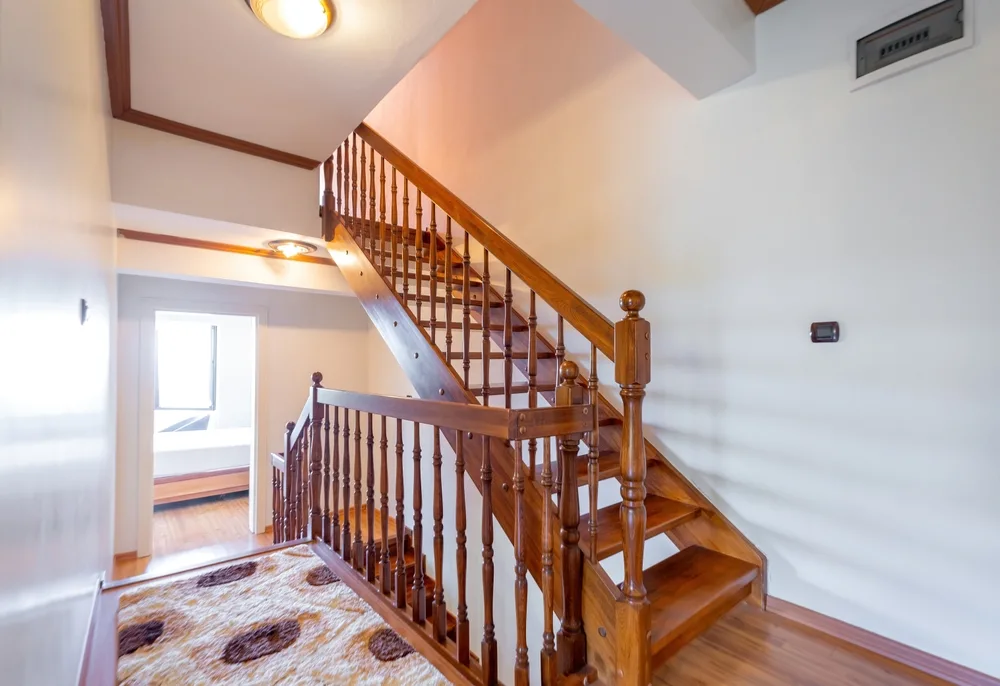
A staircase passes through multiple levels and is often visible from several rooms, making it an important connection between flooring, trim, and architectural details. Its separate components should feel related even when they do not match exactly. When specifying wood stair handrails, designers and construction professionals should consider the tread species, floor color, railing style, surrounding millwork, and lighting before settling on a material and finish.
Decide Whether to Match or Contrast
A coordinated staircase does not require every wood surface to have the same color. Matching and contrasting approaches can both work, provided the relationship appears intentional.
Matching the handrail with the treads creates visual continuity. This approach is useful when the staircase should read as a single architectural feature. It can also help connect hardwood flooring on separate levels.
Contrast gives the rail greater definition. A dark handrail above natural oak treads, for example, creates a clear outline and can relate to dark door hardware, window frames, or iron balusters. A natural wood rail combined with painted risers and balusters produces a lighter effect.
The decision should be made early because it affects the wood species, stain, balusters, posts, fittings, and finishing process. Waiting until installation begins may result in compromises or mismatched components.
Start With the Wood Species
Using the same species for the handrail and treads is the most direct way to establish a visual relationship. Species affects grain pattern, natural color, stain absorption, and the amount of variation visible across longer pieces.
Red oak has an open, noticeable grain and warm undertones. It often suits traditional and transitional interiors, particularly when paired with medium or dark stains. White oak generally has a straighter grain and more neutral coloring. It works well with natural finishes, muted browns, and many contemporary interiors. Maple has a smoother grain and a lighter appearance but can respond differently to stain.
Using different species is possible, but the distinction should be deliberate. A smooth maple rail placed above strongly grained oak treads may not look coordinated if both receive a similar stain. In this situation, an intentional color contrast may produce a more convincing result.
Account for Natural Wood Variation
Wood components cut from the same species will not be identical. Grain density, mineral streaks, heartwood, sapwood, and natural coloring vary from one board to another. Handrails can make this variation especially visible because they are long, continuous pieces.
Project teams should set reasonable expectations with property owners. A sample represents the general species and finish, not the exact grain pattern of every component. Variation is a normal characteristic of hardwood rather than a manufacturing flaw.
Dealers can help by explaining how the selected species typically varies. Designers can then decide whether a clear finish, light stain, or darker color will best suit the intended appearance.
Compare Color and Undertones
Two brown finishes may still conflict if one has red undertones and the other appears yellow, gray, or green. This issue becomes more noticeable when the handrail and flooring are viewed side by side.
When matching an existing floor, use a physical piece of flooring or a finish sample. A product name alone is not enough because stain formulas and application methods differ between manufacturers. The age of the existing floor must also be considered. Sunlight, cleaning, wear, and oxidation may have changed its original color.
An exact match may not always be realistic. A closely related tone or an intentional contrast is often more successful than a near match that looks slightly incorrect.
Do Not Overlook Finish Sheen
Sheen affects how color and grain are perceived. A glossy rail reflects more light and may appear darker or richer than a low-sheen tread in the same color. Matte and satin finishes generally create a quieter appearance, while higher-gloss surfaces draw attention to the railing profile.
The handrail also receives frequent contact. The chosen coating should be appropriate for regular handling and cleaning. Contractors should follow the finish manufacturer’s care and cure instructions before the staircase enters normal use.
When several suppliers are involved, confirm how each company describes its sheen. Terms such as satin or semi-gloss are not always visually identical across different finishing systems.
Coordinate the Balusters and Newel Posts
Balusters and newel posts influence how much visual weight the handrail carries. Detailed wood balusters and turned posts create a traditional composition. Square wood components provide a simpler appearance, while iron balusters add material contrast.
If the balusters will be painted, the handrail can match the treads without making the staircase feel too wood-heavy. If all components are stained, varying their profiles and proportions can prevent the railing from appearing visually dense.
Newel posts should be large enough to suit the rail profile and overall staircase scale. A wide handrail paired with an undersized post may look unbalanced, even if the stain colors match.
Keep Profiles and Fittings Consistent
A handrail system may require straight sections, turns, easings, goosenecks, and returned ends. Every fitting must correspond with the selected rail profile. Small differences in shape or dimensions can produce poor joints and visible interruptions.
The baluster style also determines whether a plowed or non-plowed rail is needed. Square-top wood balusters commonly fit into a channel beneath a plowed rail, while other configurations may use a non-plowed profile.
Contractors should document the rail profile, fittings, baluster type, post locations, finish, and required lengths in one specification. This makes compatibility easier to confirm before ordering.
Approve Samples Under Project Lighting
Samples should be viewed beside the flooring, treads, paint, and metal finishes in the actual space. Daylight and artificial light can shift how stain colors appear. Reviewing samples vertically as well as horizontally is helpful because light strikes rails and floors differently.
Successful coordination comes from treating the staircase as one planned assembly rather than a collection of separate products. Visit Wood Stair Co to compare handrail profiles, wood choices, finish options, and coordinating stair parts for your next residential or commercial project.
